
First published in VANGUARD on January 10, 2026 https://www.vanguardngr.com/2026/01/tinubus-option-value-why-wike-may-be-more-useful-as-a-spoiler-than-a-convert/
There is a seductive, but often analytically lazy, way to read Nigerian politics: as a sequence of personal betrayals, moral failures, and episodic intrigue. That narrative is emotionally satisfying, but it routinely misses the strategic structure that repeats across election cycles. If you want to understand why certain “obvious” moves do not happen, why, for example, President Bola Tinubu has not compelled Nyesom Wike to make a clean, unambiguous leap into the APC, you are better served by game theory than gossip.
Start with a simple premise; politics in a competitive patronage system is a repeated coalition-formation game under uncertainty. The key objective is not merely to win votes; it is to shape the set of feasible coalitions, who can coordinate with whom, at what cost, and under what credible commitments.
From that perspective, the question is not “Why hasn’t Tinubu twisted Wike’s arm?” The question is: “What is the equilibrium value of keeping Wike formally ambiguous but functionally aligned?”
The incumbent’s advantage is not popularity—it is coordination
In many electoral environments, the incumbent’s core advantage is not that he is loved; it is that his opponents cannot coordinate. Coordination failures can arise from ideology, regional balancing, ego, or simply the inability to credibly bargain over tickets and spoils. This matters because opposition success typically requires a focal point; one ticket, one message, one organizational machine. When the opposition cannot focalize, the governing party wins even under mediocre performance because the anti-incumbent vote fragments.
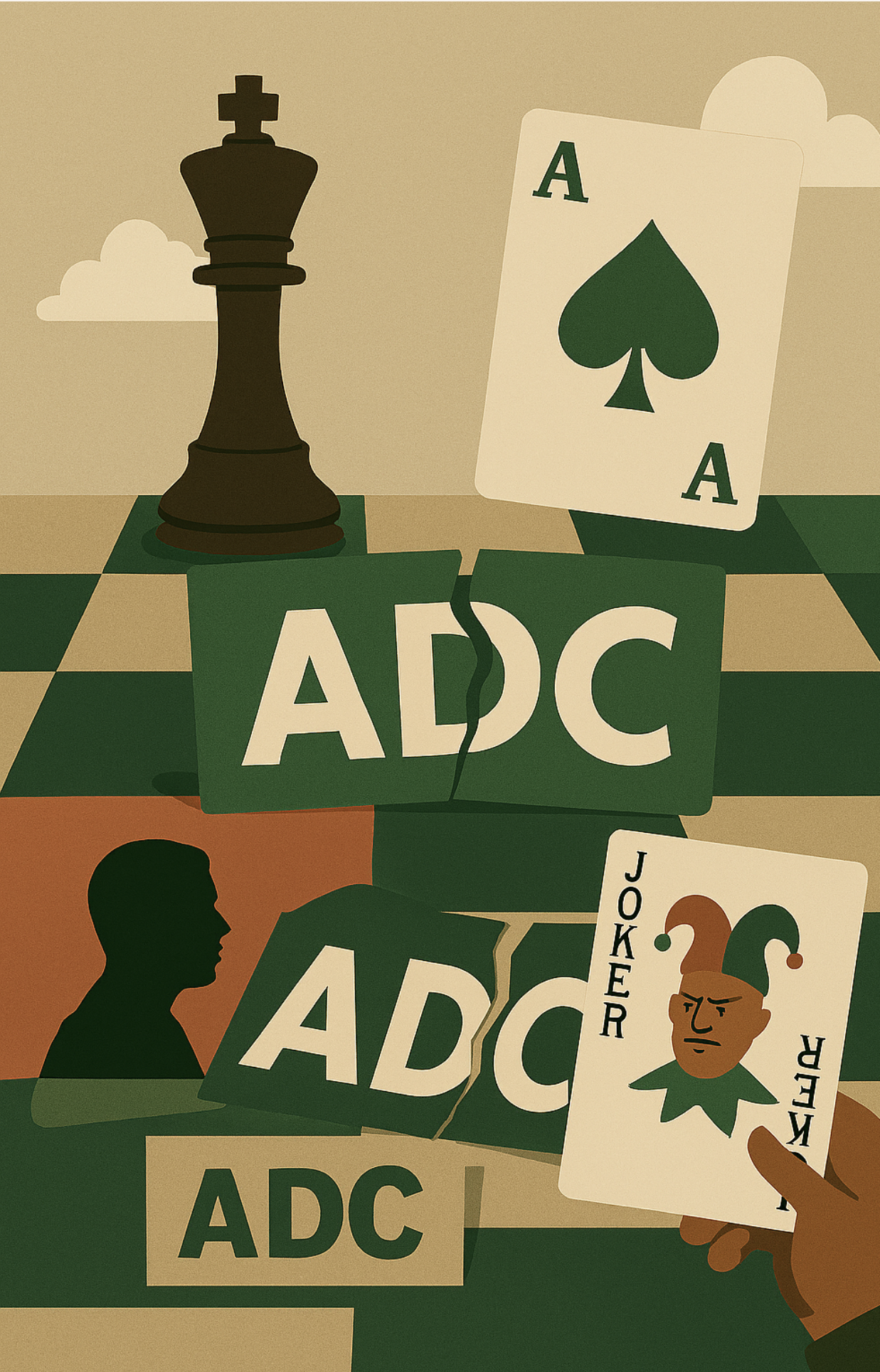
Nigeria’s emerging opposition coalition, operating under the African Democratic Congress (ADC), is explicitly trying to solve this coordination problem. In mid-2025, opposition figures announced an alliance under the ADC banner with interim leadership, positioning it as a vehicle to challenge Tinubu in 2027. But the coalition’s ambition highlights the incumbent’s incentive; prevent the coalition from becoming a stable focal point.
That is where Wike enters as a strategic instrument.
Why Wike is strategically more valuable “outside” than “inside”
In a sequential bargaining game, absorbing a powerful broker like Wike into the APC too early can be suboptimal for Tinubu for at least three reasons.
First, absorption has internal governance costs. A formal defection forces the APC to “price” Wike, through offices, access, and factional concessions. That inevitably creates intra-party resentment and redistributes rents. The incumbent’s coalition, like any coalition, has a finite capacity to absorb new power centers without provoking internal instability.
Second, ambiguity preserves option value. Keeping Wike in an aligned-but-not-fully-integrated posture is like holding a financial option; Tinubu gets much of Wike’s disruptive capacity without paying the full integration premium. And if conditions change, the incumbent can still exercise the option, bring him in later, on different terms, when the marginal benefit is highest.
Third, Wike’s maximum utility may be as a spoiler rather than a teammate. A spoiler’s effectiveness depends on plausible deniability and positional flexibility. If Wike is formally APC, his attacks on opposition factions are read as standard partisan warfare. If he is not formally APC, his interventions can be framed as intra-opposition “discipline,” principled dissent, or “realism” all of which can do more damage because they travel through the opposition’s own channels of trust.
This hypothesis supports why Tinubu allowing Wike to keep tearing at the PDP until it is functionally hollowed out, then redeploying him against whoever the ADC ultimately fields, should not be dismissed as conspiracy thinking. It is a recognizable equilibrium strategy; deprive your opponents of coherence before they ever become a credible alternative.
Rivers as a laboratory: defection, signaling, and credibility
Rivers State has effectively become a laboratory for understanding this broader logic.
Consider the factual arc. Rivers has been consumed by high-stakes political conflict, including repeated impeachment pressures and federal intervention. Premium Times reports that the Rivers Assembly initiated impeachment proceedings again in early January 2026, described as the third such attempt since 2023, and recalls that Tinubu declared a state of emergency in Rivers on March 18, 2025, suspending elected officials for six months. Reuters likewise reported the March 2025 emergency rule as a rare, sweeping intervention in the oil-rich state.
Then comes the defection: Governor Siminalayi Fubara publicly announced on December 9, 2025, that he was leaving the PDP for the APC. This matters not only as a headline, but as a signal in a game with incomplete information. Defections convey beliefs. They broadcast an insider’s assessment of where enforcement power sits, where institutional protection is more likely, and which side is better positioned to impose costs.
In that sense, Fubara’s decampment is not just personal survival, it is an informational shock to the opposition. If a sitting governor concludes that the dominant strategy is to move toward the incumbent’s party, that weakens opposition morale, disrupts local machines, and encourages further cascading defections. The technical term is an information cascade; once early movers signal that “the safe bet” is the ruling party, later actors update their beliefs and follow, even if privately uncertain.
And here is the key strategic twist; if defection is meant to buy safety, Rivers is demonstrating the limits of that bet. Vanguard reports continuing conflict dynamics around impeachment pressures even after the governor’s defection. In game terms, defection does not automatically restore credibility; it can merely shift the arena of contestation.
The opposition’s Achilles heel: the ticket allocation problem
Now move from Rivers to the ADC coalition. If the opposition is to break the incumbent’s coordination advantage, it must solve its own internal bargaining problem; who gets the ticket, who controls the machine, and what credible commitments prevent betrayal after nomination?
Public commentary and reporting increasingly suggests this is the coalition’s hardest constraint. BusinessDay reported on January 9, 2026, that Yusuf Datti Baba-Ahmed argued Peter Obi is unlikely to secure the ADC presidential ticket, citing entrenched interests and competing ambitions within the coalition. That is not a trivial remark. It is an admission that the coalition may reproduce the very fragmentation it was designed to overcome.
Here is the harsh logic: a coalition that cannot credibly allocate its top prize becomes easy to destabilize from the outside. External actors do not even need to “destroy” it; they merely need to raise the expected probability of internal betrayal. Once that probability rises, donors hesitate, volunteers drift, and elites avoid costly commitments. The coalition shrinks before the campaign even begins.
This is precisely where a figure like Wike becomes strategically potent. You do not deploy him only to attack opponents directly; you deploy him to increase the perceived volatility of opposition unity, especially at the moment of ticket selection. If Wike has previously demonstrated a willingness to prosecute political conflict against major opposition figures, then his threat is reputationally credible. And in repeated games, reputation is power; past aggression lowers the cost of future intimidation because others already believe you will do it.
Wike’s own incentive: relevance through credible threats
Wike is not merely an instrument; he is also a rational player. His value is derived from being able to impose costs. The moment he becomes a domesticated partisan, fully absorbed, fully constrained, his bargaining power can decline. Remaining semi-autonomous allows him to threaten multiple sides and extract concessions from whichever side most fears his intervention.
Notably, Wike himself has publicly belittled the ADC coalition’s capacity, questioning its leaders’ electoral value and insisting they cannot unseat Tinubu. Whatever one thinks of that claim, it is consistent with the broker strategy; discourage opposition coordination by publicly undermining the coalition’s credibility and morale.
What this implies for 2027
If you accept the strategic frame, the conclusion is unsettling but clarifying, Tinubu’s most effective “campaign” may be happening years before ballots are cast, through controlled ambiguity, selective absorption of defectors, and the managed destabilization of opposition coordination.
For the ADC coalition, the remedy is not rhetoric. It is mechanism design.
A serious coalition would need at least three credible commitments:
1. A transparent, enforceable nomination process that reduces post-primary defection incentives.
2. A binding intra-coalition pact on regional balancing, campaign finance governance, and dispute resolution.
3. A credible deterrent against spoilers; not by moral condemnation, but by raising the cost of sabotage (organizationally, reputationally, electorally).
Absent these, the opposition is playing a coordination game without an enforcement mechanism, while the incumbent plays a repeated game with institutional leverage and an expanding coalition.
In that world, Wike may not need to “join” the APC in order to be useful to Tinubu. The point is not the jersey; it is the function. And in Nigerian politics, function often dominates form.
_____
Philip Obazee retired as a managing director from a global asset management company based in Philadelphia, USA, and currently, he is the founder and chief executive officer of Polymetrics Americas Research, LLC.
RETURN


Is Artificial Intelligence Stupid? – Misconceptions to a Legal AlbatrossMy engagement with artificial intelligence (AI) began in 1998, when I was a ...

Wike Is Right on the Money: Nigerian Football, National Pride, and the Lost Discipline of Sports DevelopmentPreviously published on VANGUARD Newspaper...

The Blessing Has Been Given; The Stewardship Remains- A Sermon for the Thirteenth Sunday in Ordinary Time -My dear brothers and sisters in Christ,I ag...

AI Can Cross Disciplines. It Still Can’t Replace Expert Judgmentfirst published on Substack on April 28, 2026Large language models (LLMs) have becom...
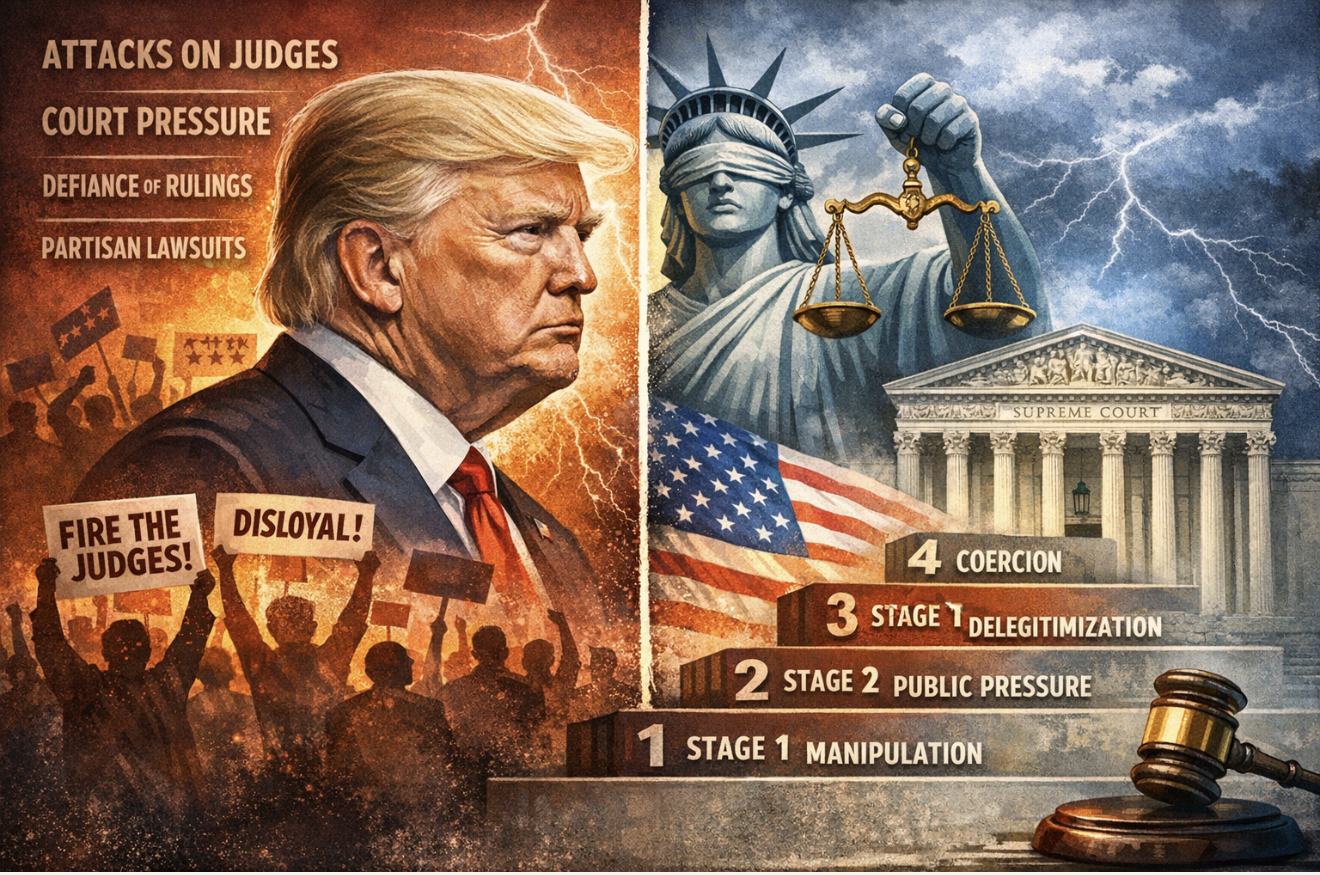
Intimidating The Judiciary: Trump and A Global History of Executive Pressure on Supreme Courts- From Washington to Berlin to Budapest, and the warning...



Social & Political Issues / Sep 19, 2026
A Death, and a Remembrance of a Time PastSocial & Political Issues / Oct 18, 2003
Abuja As A Hi-Tech Hub For Innovation, Entrepreneurship, And Knowledge ExchangeSocial & Political Issues / Jun 02, 2004
About "Security Breach" and "Coup Scare"Social & Political Issues / Oct 05, 2002
ABOUT THE NORTHERN AGENDA : "General said, Chief said, Alhaji said"Social & Political Issues / Feb 09, 2006
Abduction of Oil Workers: Matters Arising© 2026 Segun Toyin Dawodu | All rights reserved