
First published in VANGUARD on January 6, 2026 https://www.vanguardngr.com/2026/01/the-adcs-founding-contradiction-why-atiku-wont-hand-the-ticket-to-obi/
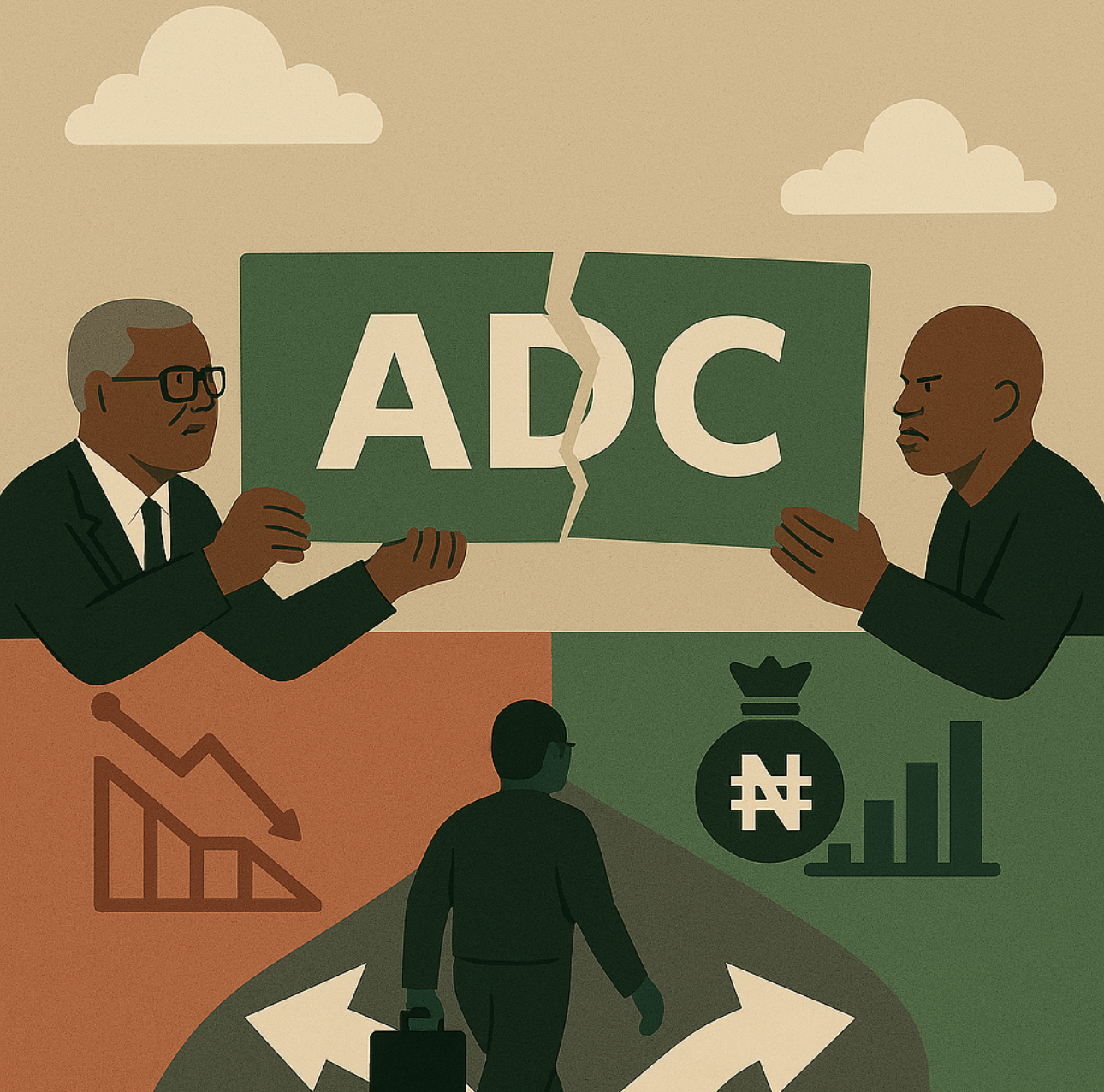
In the final days of 2025, Peter Obi formally entered the African Democratic Congress (ADC), a coalition platform increasingly positioned as the opposition’s vehicle for 2027. Atiku Abubakar welcomed him publicly, framing the defection as a consequential step for opposition consolidation. Yet almost immediately, the coalition encountered the oldest problem in Nigerian politics; unity is easier to announce than to price, and the presidency is the most expensive asset on the balance sheet.
The ADC’s dilemma is not merely personal. It is structural. The coalition is attempting to combine two political “comparatives,” Atiku’s elite network and institutional muscle, and Obi’s mass credibility with a large segment of disaffected voters, without clarifying which comparative actually controls the ticket. When coalitions fail, it is rarely because the partners misread the incumbent. It is because they misread each other.
One can call it, in the old idiom, an “Aha!” moment: if organization and financing win elections, why would a coalition’s principal builder voluntarily concede the prize to a late-arriving partner whose strategic incentives are not aligned with his?
The ticket is the return on investment
Start with the most unromantic fact: in Nigerian presidential politics, the ticket is not only a nomination; it is the primary mechanism through which financiers, brokers, governors, legislators, party barons, and contractors can rationalize their effort and risk. Parties are not just platforms of belief. They are distributional technologies. They allocate control rights over appointments, contracts, regulatory discretion, and, crucially, future bargaining power.
From that perspective, Atiku’s refusal to concede the ticket to Obi is not a moral judgment. It is a rational defense of control rights. Atiku has sought the presidency repeatedly; by 2027 he will be running not only against an incumbent machine but also against time and political fatigue. The coalition, as described by major reporting last year, was spearheaded by Atiku and Obi precisely because the opposition understood it needed scale to contest a well-resourced incumbent. If Atiku is one of the coalition’s central architects, he will treat the ticket as the payoff that makes the coalition worth building in the first place.
Conceding the ticket to Obi would convert Atiku from principal to sponsor, an inversion that rarely occurs voluntarily. Sponsors finance: principals govern. Sponsors bear cost without controlling outcomes. That is not how Nigerian political capital is normally deployed.
The credible commitment problem is not fixable by rhetoric
Even if Atiku admired Obi’s electoral appeal, he faces a classic credible-commitment constraint; how does one guarantee that Obi, once nominated, will remain bound to the coalition’s internal bargain?
Obi is not a conventional patronage politician. His appeal is tied to a reformist brand and a reputation, fairly or not, as a candidate less beholden to the old distributive networks. That brand is precisely why he attracts voters. But it is also why a patronage-centered coalition struggles to “contract” with him. If the coalition’s internal stakeholders expect predictable access and Obi expects autonomy, the partnership is unstable by design.
Evidence of this divergence already appears in the public signaling. A leading figure in the Obidient movement recently rejected the notion of Obi accepting a vice-presidential slot under Atiku, explicitly closing off the subordinate position that coalitions often offer as compensation. That stance may energize Obi’s base, but it also tells coalition brokers that Obi is not entering as a negotiable junior partner. In bargaining terms, he is stating a high reservation value.
Atiku, in turn, has no reason to accept a partner with a high reservation value and low enforceability, especially when the coalition’s success requires internal discipline over candidate selection, messaging, financing, and regional balancing.
Coalition politics is about sequencing, not sentiment
ADC leaders and allied voices have tried to downplay early ticket talk, urging attention to party building and national structure rather than the unresolved Obi–Atiku relationship. That messaging is sensible, but it is also a tell. It suggests the coalition recognizes that the ticket question is the latent fracture.
In stable coalition design, sequencing matters:
1. First, you agree on a governance architecture—decision rules, dispute resolution, financing obligations, enforcement mechanisms.
2. Then, you choose a candidate consistent with that architecture.
3. Finally, you mobilize.
ADC is attempting to mobilize while leaving governance ambiguous. That approach can work when a dominant leader exists, and everyone knows it. It fails when two plausible leaders both believe they are dominant.
Here is the decisive point: if Atiku believes the coalition exists because his political machinery can assemble elite compliance (delegates, governors, local structures, funding pipelines), he will insist on controlling the ticket. If Obi believes the coalition exists because his electoral legitimacy can mobilize new voters and confer moral contrast to the incumbent, he will insist on controlling the ticket. Both claims can be true, but they cannot both be controlling.
The zoning arithmetic and the incumbent’s advantage sharpen the knife
Nigeria’s informal zoning norms, never fully codified, always politically powerful, intensify the conflict. With a sitting president from the South-West, many elites will argue (explicitly or quietly) that 2027 should “return” to the North. This is not a democratic principle; it is a stability heuristic used by political brokers to reduce the probability of elite defection and regional grievance.
Atiku, as a northern candidate with deep elite ties, can plausibly sell that heuristic inside a coalition even if many voters find it cynical. Obi, from the South-East, embodies a counter-claim; that the region has waited too long, and that the opposition must energize the electorate rather than merely recycle elite equilibrium. The problem is that internal party selection is often dominated by elites, while general elections require voter enthusiasm. Coalitions die when the selectorate and the electorate demand different candidates.
The incumbent’s advantage makes this even more acute. Reporting over the past year has emphasized that Nigeria has entered campaign mode early, with the ruling party pressing incumbency advantages while opposition figures attempt to unify. Under such conditions, Atiku will view “giving away” the ticket as not merely a concession to Obi, but as an existential strategic error: if the coalition loses, it may not be rebuildable, and Atiku will have surrendered his last credible path.
“Promised ticket” rumors increase, not reduce, Atiku’s resistance
Some analysts have floated the idea that Obi may have been promised the ADC ticket as part of the defection logic. If such a promise exists, it makes the coalition’s governance problem worse, not better, because it raises the stakes of betrayal. If Atiku believes a promise was made without his controlling consent, he has an incentive to reassert authority. If Obi believes a promise was made and later reneged upon, he has an incentive to exit or escalate. Either way, informal promises without enforcement mechanisms are fuel, not glue.
This is why mature coalitions write things down. Not because Nigerian politicians suddenly become Swiss bureaucrats, but because ambiguity is a weapon. Whoever benefits from ambiguity will preserve it; whoever suffers from ambiguity will try to clarify it. Right now, both Atiku and Obi believe they suffer, hence the inevitability of conflict.
The hard truth: Atiku needs Obi’s voters, not Obi as president
From Atiku’s standpoint, Obi is most valuable in three ways:
1. Voter mobilization among younger and urban constituencies suspicious of establishment bargains.
2. Moral contrast that blunts “same old politics” critiques.
3. Regional breadth, especially in the South-East, where the opposition wants stronger consolidation.
None of those require Obi to be the presidential nominee. Indeed, from a coalition-control view, those assets are easier to capture if Obi is integrated as a partner with bounded authority, campaign leadership, policy agenda ownership, or a succession bargain, rather than installed as president with sovereign discretion.
But Obi’s own logic runs the other way: if he joins as a subordinate, his brand is diluted, his credibility is mortgaged, and his movement risks being absorbed into the very order it opposes. His refusal (through allies) to accept a vice-presidential slot signals that he understands this risk.
So, the ADC dilemma is a textbook bargaining deadlock: Atiku cannot rationally concede the ticket to Obi without endangering control; Obi cannot rationally accept subordination without endangering credibility. Both men can be acting “rationally” and still destroy the coalition.
What ADC must do if it wants to survive
There are only a few exit ramps:
• A transparent, enforceable primary with credible internal election management rare, but possible. The loser must be compensated with real governance rights, not vague promises.
• A formal coalition charter that specifies financing obligations, campaign leadership, policy program ownership, and post-election governance allocation, appointments, legislative agenda control, and dispute resolution.
• A sequenced ticket arrangement (for example, a power-sharing compact or rotational bargain) that creates a credible future for the losing faction—again, written and backed by enforceable stakeholder commitments.
Without such mechanisms, the coalition will revert to what Nigerian politics does best, patronage arithmetic and elite sorting. And in that arithmetic, the man who built the machine seldom hands the keys to a partner who refuses to be managed.
Atiku may welcome Obi in public, as he has. But welcoming a coalition partner is cheap. Conceding the ticket is not. And in the political economy of Nigeria, the expensive thing is usually the thing you keep.
_____
Philip Obazee retired as a managing director from a global asset management company based in Philadelphia, USA, and currently, he is the founder and chief executive officer of Polymetrics Americas Research, LLC.
RETURN


Is Artificial Intelligence Stupid? – Misconceptions to a Legal AlbatrossMy engagement with artificial intelligence (AI) began in 1998, when I was a ...
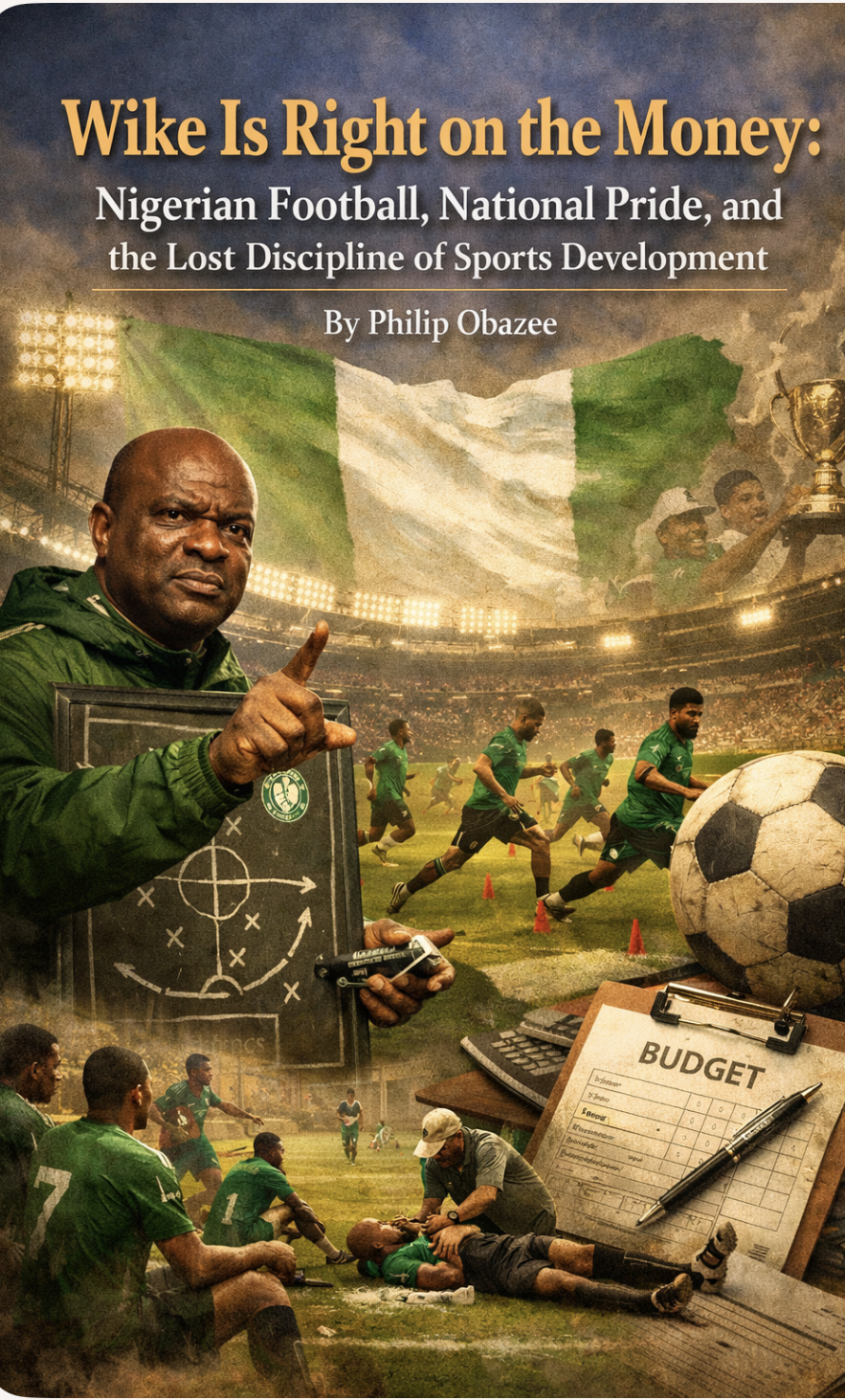
Wike Is Right on the Money: Nigerian Football, National Pride, and the Lost Discipline of Sports DevelopmentPreviously published on VANGUARD Newspaper...

The Blessing Has Been Given; The Stewardship Remains- A Sermon for the Thirteenth Sunday in Ordinary Time -My dear brothers and sisters in Christ,I ag...

AI Can Cross Disciplines. It Still Can’t Replace Expert Judgmentfirst published on Substack on April 28, 2026Large language models (LLMs) have becom...
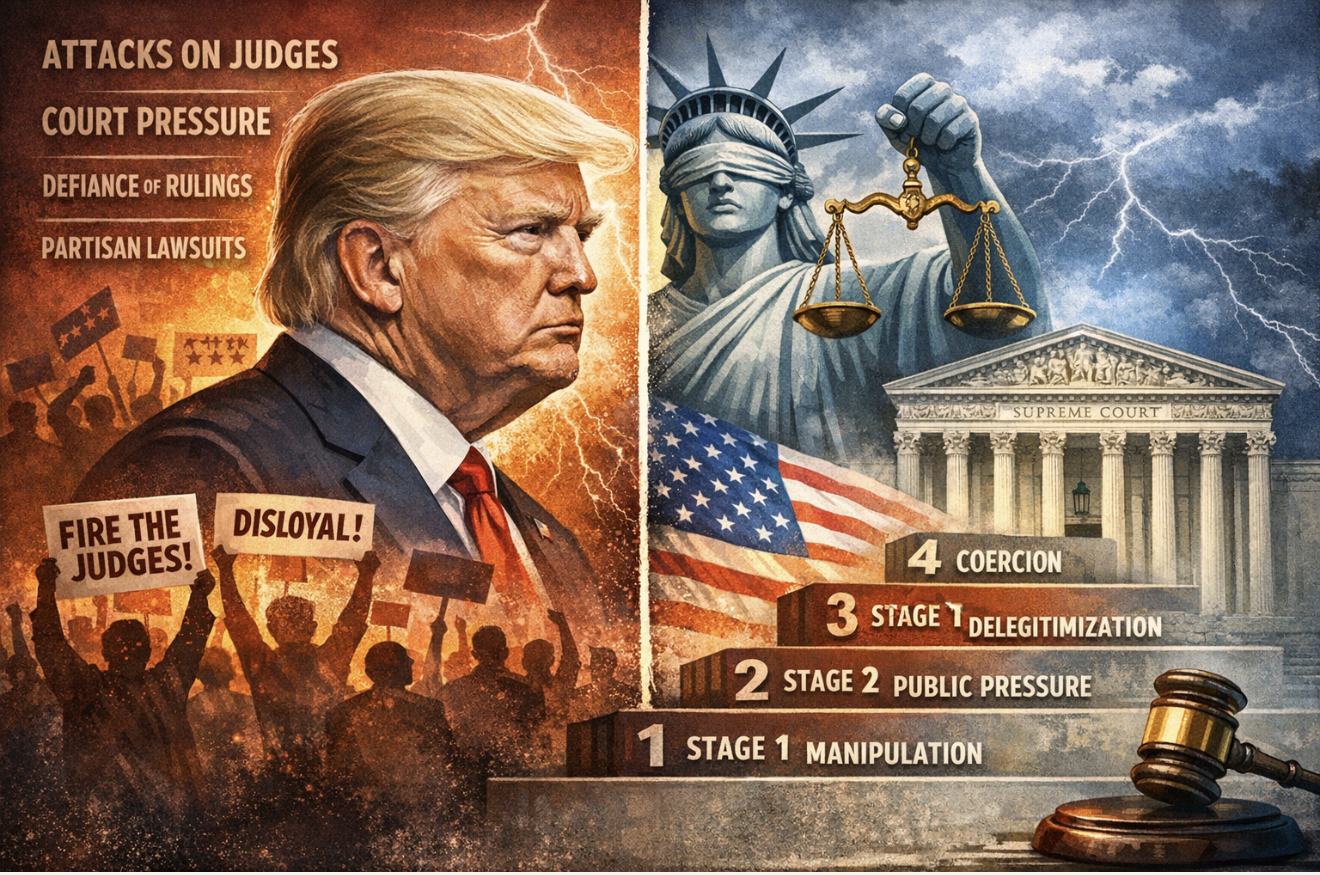
Intimidating The Judiciary: Trump and A Global History of Executive Pressure on Supreme Courts- From Washington to Berlin to Budapest, and the warning...



Social & Political Issues / Sep 19, 2026
A Death, and a Remembrance of a Time PastSocial & Political Issues / Oct 18, 2003
Abuja As A Hi-Tech Hub For Innovation, Entrepreneurship, And Knowledge ExchangeSocial & Political Issues / Jun 02, 2004
About "Security Breach" and "Coup Scare"Social & Political Issues / Oct 05, 2002
ABOUT THE NORTHERN AGENDA : "General said, Chief said, Alhaji said"Social & Political Issues / Feb 09, 2006
Abduction of Oil Workers: Matters Arising© 2026 Segun Toyin Dawodu | All rights reserved