
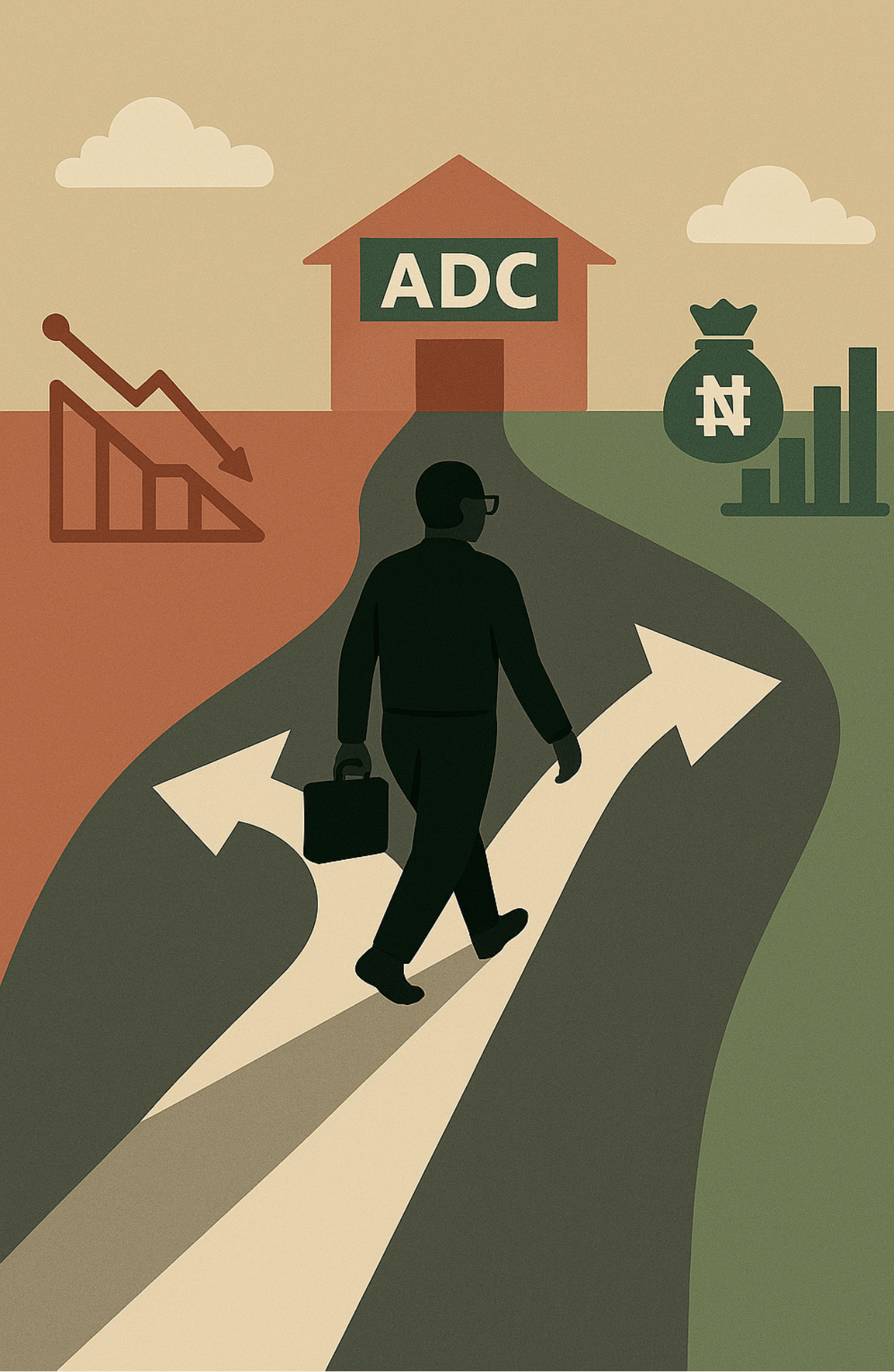
First published in VANGUARD on January 4, 2026 https://www.vanguardngr.com/2026/01/peter-obis-move-to-the-adc-wasnt-a-surprise-it-was-an-economic-decision/
In Nigeria, opposition isn’t built on speeches. It is built on structure and structure is expensive.
Peter Obi’s decision to leave the Labour Party and align with the African Democratic Congress (ADC) at the end of 2025 has been narrated as betrayal by some, as strategy by others, and as destiny by those who treat Nigerian politics as a perpetual carousel of defections. But the more instructive reading is the least theatrical one; Obi’s move is best understood as an institutional and financial calculation about how opposition power is manufactured in Nigeria and how often it collapses when it is not properly capitalized.
Obi announced his defection on December 31, 2025, in Enugu, in a setting that made the symbolism plain; an end-of-year rally, a forward-looking address, and an explicit invitation to supporters to see 2026 as the start of a “rescue” project. His message was not merely “I have joined another party.” It was “we should reorganize the opposition under a single platform.” That point matters because it locates the move inside the broader, now well-documented effort to consolidate anti-APC forces ahead of 2027, an effort that has been framed, even by international observers, as an attempt to prevent Nigeria’s drift toward one-party dominance.
Still, the question that should preoccupy serious analysts is not whether Obi is morally right to leave, but why the Labour Party after delivering one of the most electrifying third party runs in Nigeria’s Fourth Republic could not remain a viable platform for him. And the answer, unromantic as it sounds, is that he could win crowds without winning the machinery.
A campaign is episodic; a party is continuous
The Labour Party became nationally salient in 2023 because it briefly functioned as a vessel for a movement. The campaign, particularly in urban centers and among younger voters, created a visible political identity. But campaigns end. Parties persist. After the election, the focus shifts from persuasion to control; who runs the national secretariat, who commands state chapters, who certifies primaries, who manages litigation, who allocates tickets, who raises recurring funds, who pays staff, who maintains the ward-level infrastructure that turns sentiment into votes?
On those questions, the Labour Party has been visibly unstable. Reporting across late 2024 and 2025 describes deep internal disputes, contested leadership claims, and institutional fragmentation, exactly the conditions under which a presidential aspirant becomes structurally insecure inside his own platform. A politician does not need to be expelled to be constrained. It is enough for the party’s internal veto points, executives, factions, courts, and financiers, to become unreliable.
This is why the reaction to Obi’s defection is itself revealing. A Labour Party faction led by Julius Abure did not merely lament Obi’s exit; it described it as liberation and claimed the party had “parted ways” with him and some allies as far back as September 2024. Whether that retrospective claim is fully accurate is almost beside the point. The more significant fact is that a major faction felt comfortable publicly declaring Obi to be effectively outside the party’s governing coalition long before he formally left. That is what institutional breakdown looks like; when the platform that carried a candidate can no longer credibly commit to him.
The hidden price of “owning” a party
Obi has long cultivated a brand of fiscal restraint, call it frugality, discipline, or cost-conscious governance, depending on your sympathies. That brand is not merely aesthetic; it has strategic consequences. Nigerian party-building is capital-intensive. To “own” a party in any meaningful sense is not to possess a logo; it is to continuously fund and manage an organization that is national in scope and permanently contested at the margins.
There are at least three routes available to a politician who, after an election, discovers that his platform is unstable:
1. Build a new party (high fixed cost; long time horizon; uncertain legitimacy).
2. Capture the existing party (high cost; high conflict; litigation risk; elite backlash).
3. Enter an alternative platform with existing infrastructure (lower fixed cost; shared control; coalition bargaining).
Obi’s choice looks like option three. The ADC, as it has been publicly framed since at least mid-2025, is not simply “another party.” It is being marketed, and in some reporting described, as a coalition vehicle designed to pool opposition assets into a single structure capable of contesting the APC in 2027. In that model, Obi does not need to personally underwrite the full cost of party construction or wage endless internal battles to discipline a fractious secretariat. He can instead attempt to convert his popularity into bargaining power inside a platform explicitly organized for aggregation.
The logic is plain: if you cannot cheaply and reliably secure the party machinery, you rent or join a stronger machine, especially one built to accommodate multiple power centers.
Why the ADC, specifically?
Because the ADC is being positioned as the “container” for opposition unity. That may sound like branding, but branding often tracks real organizational intent. The coalition narrative around the ADC has been explicit; prevent a one-party drift, unify elite opposition networks, and field a credible challenge in 2027. Obi’s own public posture, as reported, aligns with that: he urged supporters and opposition actors to unite under an ADC-led coalition.
This is not occurring in a political vacuum. In May 2025, Reuters reported that the APC endorsed President Bola Tinubu for a 2027 re-election bid, underscoring the ruling party’s intent to consolidate early. When an incumbent coalition signals early unity, the opposition faces a choice: remain fragmented (and lose by arithmetic) or attempt to coordinate under a single structure (and at least compete).
From a purely strategic standpoint, the ADC’s selling proposition is that it allows the opposition to shift from a “personality-plus-fragmentation” equilibrium to a “shared-platform” equilibrium. Nigeria has seen this movie before: incumbents fall when opposition forces aggregate credibly and sustain coordination long enough to present a unified electoral alternative. That is why the coalition project has drawn comparisons, in some reporting, to the kind of alliance that helped unseat an incumbent party in 2015.
The Labour Party problem was not ideology; it was governance
It is tempting to treat Obi’s departure as proof that Nigerian parties are ideologically hollow. They often are. But this case is better analyzed as a governance failure. The Labour Party, after 2023, did not perform the function that serious parties must perform; reliably manage internal authority, resolve disputes, and present a stable platform for successive elections. Instead, it became a battlefield.
In institutional terms, that raises the cost of staying. Every day spent navigating factional crises is a day not spent building coalition capacity, recruiting credible candidates, fundraising, or developing policy credibility. At a certain point, an aspirant who wants to remain nationally competitive must decide whether he is running for president or running a dispute-resolution clinic for a party secretariat.
Obi’s move suggests he judged the Labour Party’s internal transaction costs to be too high, and the probability of durable control too low.
The trade: less platform risk, more internal competition
None of this implies that the ADC is a magic solution. Coalition platforms have their own pathologies. They must reconcile competing ambitions, allocate tickets, manage regional balancing, and prevent a coalition from becoming merely a temporary cartel of elites. The AP and Financial Times reporting on the broader ADC-led alliance underscores both the ambition and the fragility of such arrangements.
In practical terms, Obi has traded one kind of risk for another:
* He reduces platform risk (no longer hostage to Labour Party factional instability).
* He increases primary risk (he must now negotiate within a coalition that may include other heavyweights with their own presidential aspirations).
But that trade can still be rational. A politician can survive internal competition if the platform remains coherent. What is harder to survive is a platform that cannot guarantee basic operational integrity.
The deeper truth: opposition is not an emotion; it is an organization
Many Nigerians, especially those energized by the “Obidient” wave, want politics to be a morality play: the good candidate versus the corrupt machine. But in electoral systems, machines matter. An opposition that cannot govern itself internally rarely governs the state.
If Obi’s supporters want to understand this defection without self-deception, they should see it as a lesson in political production. Votes are not manufactured by hope alone; they are manufactured by institutions: ward structures, credible agents, litigation teams, fundraising networks, disciplined messaging, and a party apparatus that can survive the inevitable turbulence of Nigerian political life.
In that sense, Obi’s move to the ADC is best read as a concession to organizational reality. The Labour Party gave him a platform for a moment. It did not give him a platform for a cycle. The ADC is attempting, whether successfully or not, to become the platform for a cycle.
And that, ultimately, is why the defection makes sense. In Nigeria, the opposition does not merely need a candidate. It needs an institution that can carry him, without collapsing under the weight of its own internal contradictions.
——
Philip Obazee retired as a managing director from a global asset management company based in Philadelphia, USA, and currently he is the founder and chief executive officer of Polymetrics Americas Research, LLC.
RETURN

Is Artificial Intelligence Stupid? – Misconceptions to a Legal AlbatrossMy engagement with artificial intelligence (AI) began in 1998, when I was a ...

Wike Is Right on the Money: Nigerian Football, National Pride, and the Lost Discipline of Sports DevelopmentPreviously published on VANGUARD Newspaper...

The Blessing Has Been Given; The Stewardship Remains- A Sermon for the Thirteenth Sunday in Ordinary Time -My dear brothers and sisters in Christ,I ag...

AI Can Cross Disciplines. It Still Can’t Replace Expert Judgmentfirst published on Substack on April 28, 2026Large language models (LLMs) have becom...
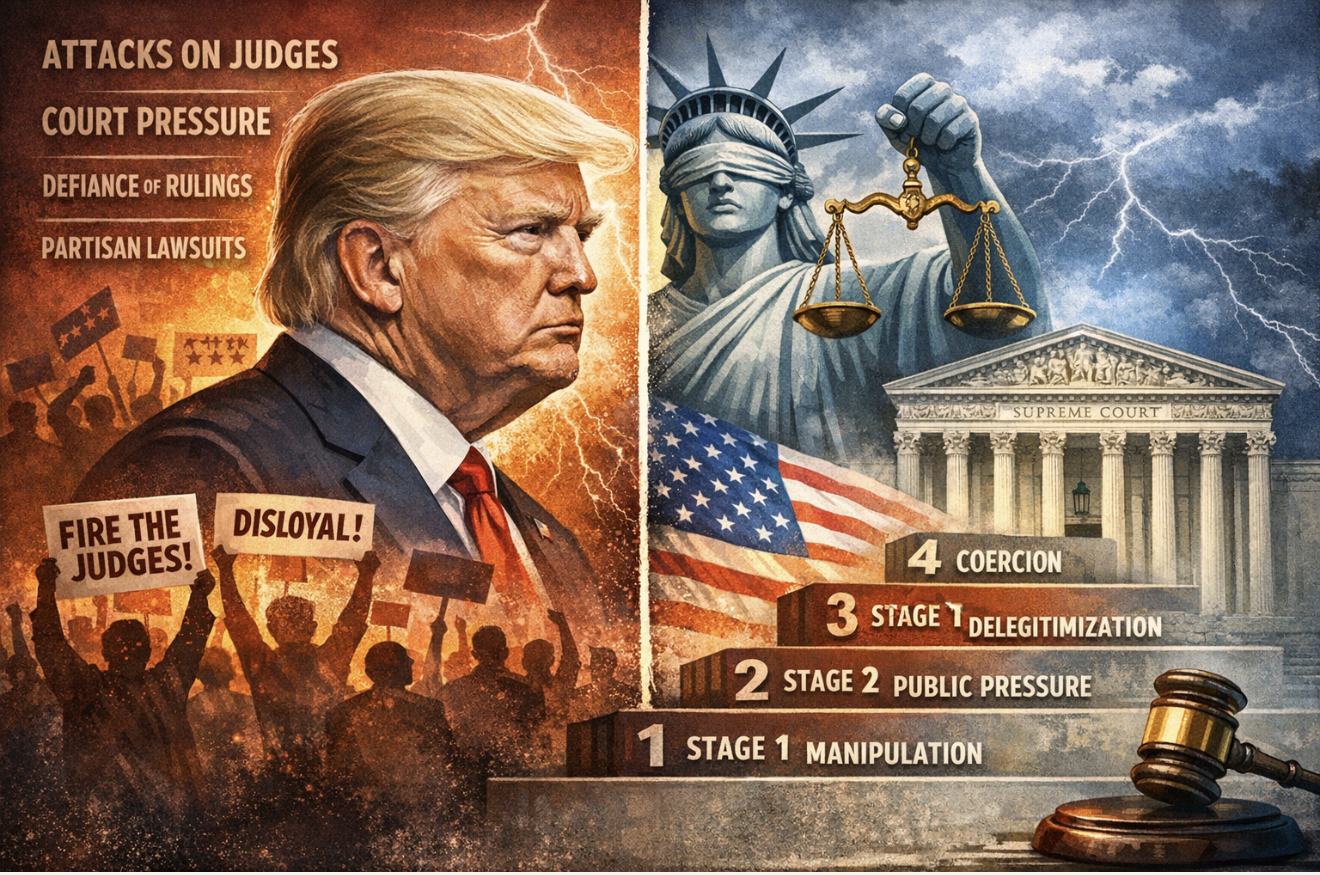
Intimidating The Judiciary: Trump and A Global History of Executive Pressure on Supreme Courts- From Washington to Berlin to Budapest, and the warning...



Social & Political Issues / Sep 19, 2026
A Death, and a Remembrance of a Time PastSocial & Political Issues / Oct 18, 2003
Abuja As A Hi-Tech Hub For Innovation, Entrepreneurship, And Knowledge ExchangeSocial & Political Issues / Jun 02, 2004
About "Security Breach" and "Coup Scare"Social & Political Issues / Oct 05, 2002
ABOUT THE NORTHERN AGENDA : "General said, Chief said, Alhaji said"Social & Political Issues / Feb 09, 2006
Abduction of Oil Workers: Matters Arising© 2026 Segun Toyin Dawodu | All rights reserved