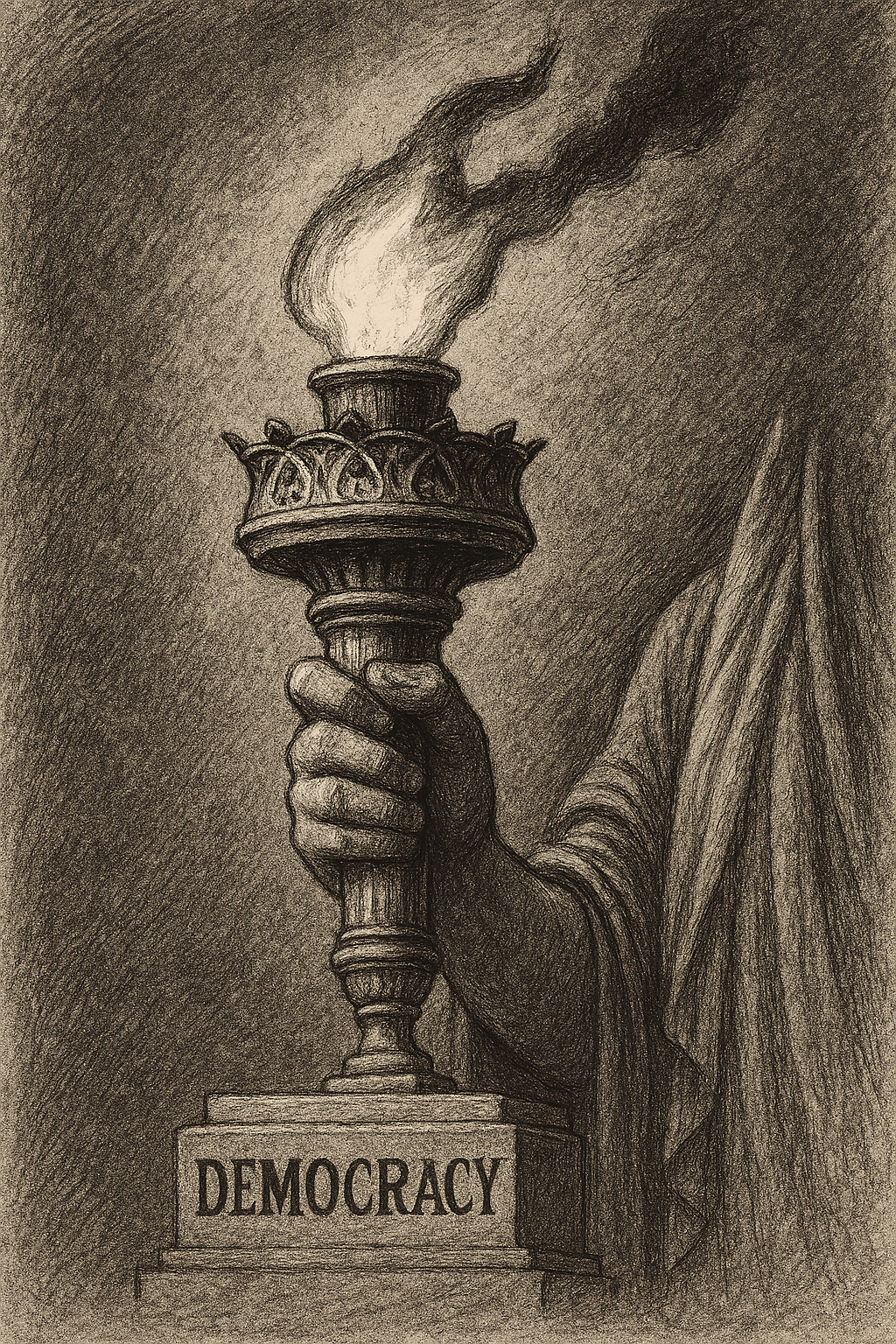
Introduction: Leadership Beyond the Individual
On December 17, 2025, President Trump delivered a televised address to the people of the United States, which was broadcast worldwide during prime time. The president's performance was disappointing to many, but it highlighted important concerns regarding governance and leadership.
Leadership in any great nation is often personified in a single figure, that is the president, prime minister, or monarch. Yet governance is never the work of one person alone. It is shaped by the institutions and actors surrounding the leader, whose role is to provide balance, accountability, and restraint. When those institutions falter, the risks to democracy multiply.
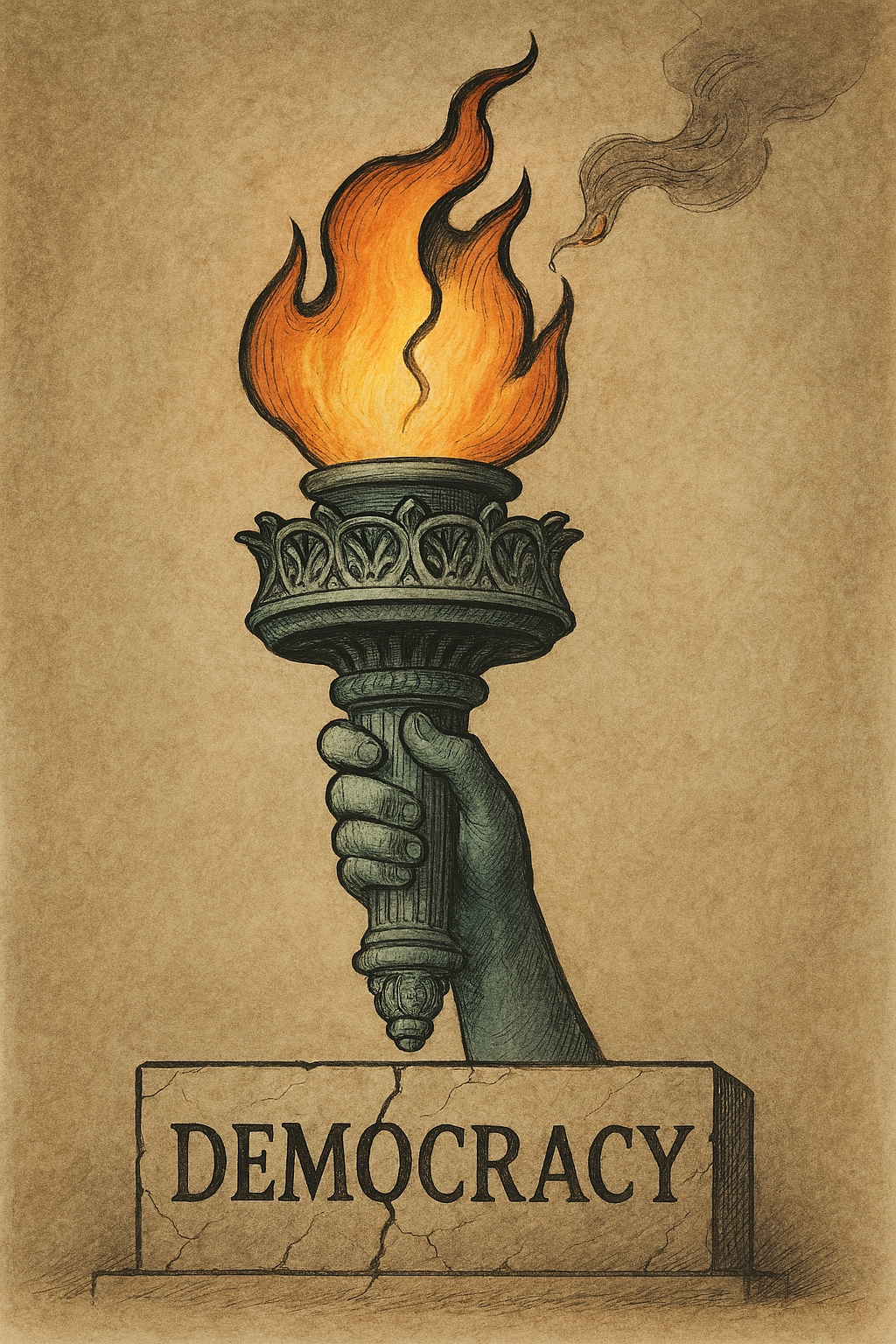
President Trump’s conduct has drawn global attention, often for actions that appear to undermine democratic norms. But the deeper concern lies not only in presidential behavior, but in the response, or silence of the institutions designed to provide oversight.
The troubling feature is not only presidential missteps but the erosion of institutional resistance. Oversight mechanisms appear weakened, whether through partisan loyalty, political calculation, or fear of reprisal.
Section II: Historical Precedents of Oversight in America
American history offers instructive examples of how institutions have acted—or failed to act—in moments of crisis:
These episodes underscore a central truth: the resilience of democracy depends less on the virtue of individual leaders than on the willingness of institutions to exercise oversight.
Section III: Constitutional Theory and the Framers’ Vision
James Madison, in Federalist No. 51, wrote: “Ambition must be made to counteract ambition.” The framers designed a system of checks and balances precisely because they understood that leaders would err.
When institutions normalize silence, they risk transforming exceptional behavior into accepted practice.
Section IV: Comparative Perspectives from Other Democracies
Other democracies offer cautionary parallels:
These cases show how quickly democratic institutions can be hollowed out when oversight is abandoned. While this is standard in many developing societies mainly in the Low-Middle Income Countries(LMIC), it is not common in High Income Countries (HIC). What we are seeing now may infinitely change the meaning of democracy.
Section V: The Danger of Normalization
Democracy is sustained by norms as much as by laws. Norms of accountability, transparency, and restraint are fragile; once broken, they are difficult to restore.
Conclusion: The Imperative of Institutional Courage
The American experiment has always rested on the interplay of ambition and restraint. Leaders will err; that is inevitable. What matters is whether institutions rise to the occasion, providing the guardrails that prevent individual missteps from becoming systemic failures.
The lesson of history is clear: democracy’s strength lies not in the perfection of its leaders, but in the courage of its institutions to act. If acquiescence becomes the norm, the greatness of American democracy, that is its resilience, its capacity for self-correction, could be imperiled. It means we all have a duty to be vigilant and speak out.
What to fear in the face of tyranny is fear itself.
I will leave a quote from Pericles, the Great Greek Military General made at the Funeral oration for the Athenian Dead in 430 BC - "Our government is called a democracy because power resides not in a few people but in the majority of our citizens. But every person has equal rights before the law; prestige and respect are paid those who win them by their merits, regardless of their political, economic or social status and no one is deprived of making his contribution to the city's welfare....."
RETURN
Is Artificial Intelligence Stupid? – Misconceptions to a Legal AlbatrossMy engagement with artificial intelligence (AI) began in 1998, when I was a ...

Wike Is Right on the Money: Nigerian Football, National Pride, and the Lost Discipline of Sports DevelopmentPreviously published on VANGUARD Newspaper...
The Blessing Has Been Given; The Stewardship Remains- A Sermon for the Thirteenth Sunday in Ordinary Time -My dear brothers and sisters in Christ,I ag...

AI Can Cross Disciplines. It Still Can’t Replace Expert Judgmentfirst published on Substack on April 28, 2026Large language models (LLMs) have becom...
Intimidating The Judiciary: Trump and A Global History of Executive Pressure on Supreme Courts- From Washington to Berlin to Budapest, and the warning...

Social & Political Issues / Sep 19, 2026
A Death, and a Remembrance of a Time PastSocial & Political Issues / Oct 18, 2003
Abuja As A Hi-Tech Hub For Innovation, Entrepreneurship, And Knowledge ExchangeSocial & Political Issues / Jun 02, 2004
About "Security Breach" and "Coup Scare"Social & Political Issues / Oct 05, 2002
ABOUT THE NORTHERN AGENDA : "General said, Chief said, Alhaji said"Social & Political Issues / Feb 09, 2006
Abduction of Oil Workers: Matters Arising© 2026 Segun Toyin Dawodu | All rights reserved