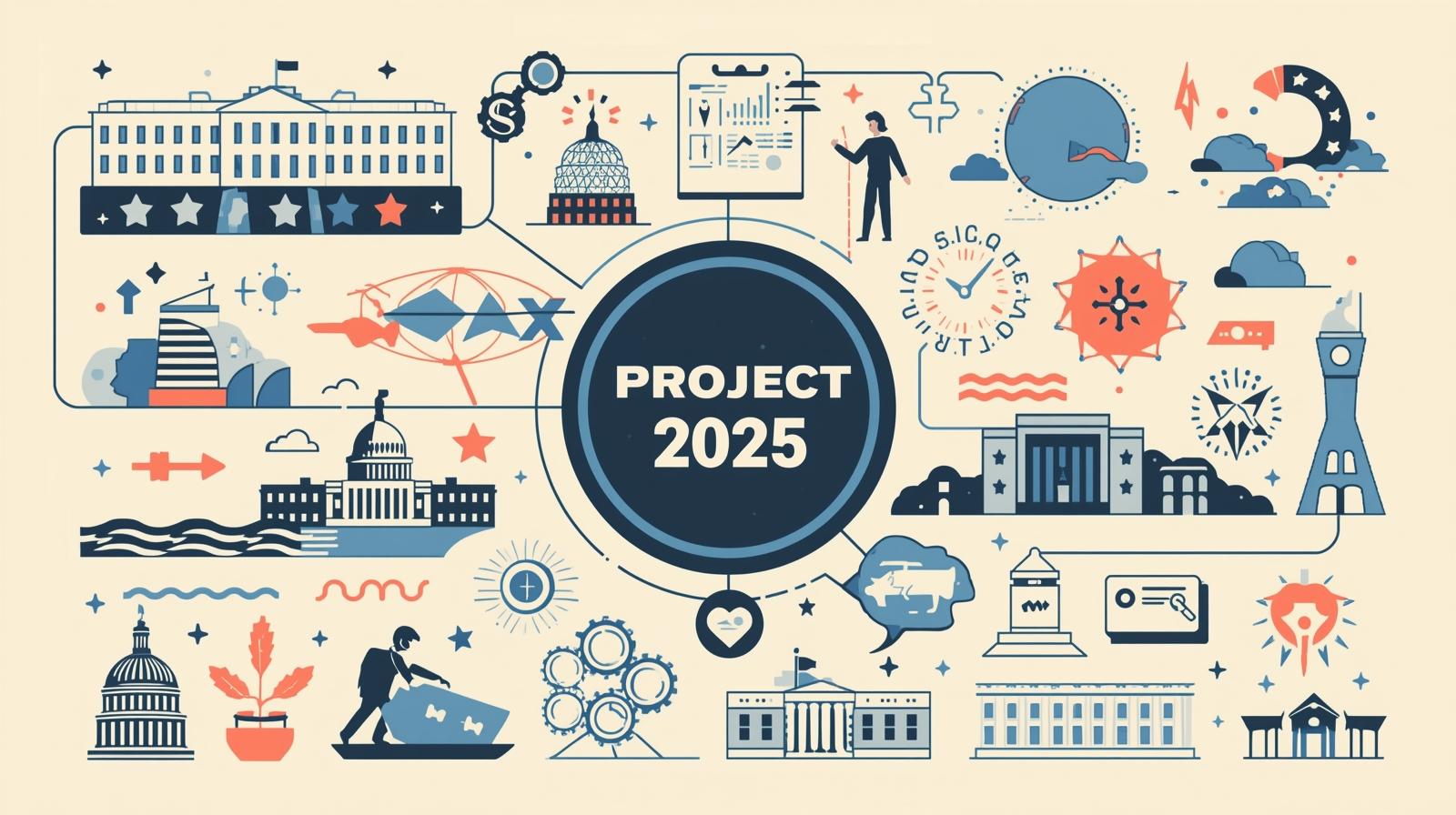
In the months since President Donald J. Trump’s return to the White House in January 2025, his administration has pursued sweeping changes to U.S. health and foreign policy. Many of these moves echo the Heritage Foundation’s “Project 2025” blueprint - a conservative policy agenda that Trump publicly disavowed during the 2024 campaign. Yet, despite his denials, the administration’s actions align closely with its recommendations, reshaping both domestic and global health governance.
At the time, former president Trump, dismissed Project 2025 as “ridiculous and abysmal” on his Truth Social platform in July 2024, later reiterating during the September presidential debate that he had “nothing to do with it” and would “purposely” not read it.
Nevertheless, since taking office, Trump has issued a series of executive orders and policy directives that have disrupted international health cooperation, defunded long-standing multilateral programs, and undermined domestic public health institutions. The consequences extend beyond U.S. borders: international agencies delivering life-saving care now face instability and resource gaps.
This article examines the major steps taken so far - focusing on reproductive health, multilateral cooperation, LGBTQ+ health, domestic public health infrastructure, and foreign aid - and assesses their strategic implications for global health security.
Global Gag Rule (GGR)
The Global Gag Rule (GGR) - a U.S. policy that bars foreign NGOs receiving American aid from offering or even discussing abortion services - was dramatically expanded under Trump to cover all forms of global health assistance.
Under the Project 2025, the proposal is to broaden the effect of GGR by restricting foreign organizations from receiving funding towards providing or advocating for abortions even if those are being done previously by non-US fundings. The plan was initially implemented under President Trumps’ first term but with the Project 2025, this will be extended to US-based organizations and all foreign aids.
This creates a disengagement from many international organizations promoting health
The World Health Organization (WHO) Withdrawal
On his first day in office, President Trump signed an executive order withdrawing the United States from the World Health Organization (WHO) - the UN agency coordinating global disease surveillance and response - citing alleged political bias and mismanagement during the COVID-19 pandemic.
This singular action meant the end of the US’s annual contribution of $450 million to the WHO that immediately created funding shortfalls.
The effect of the end of the US funding to the WHO is the disruption of vaccination campaigns in Sub-Saharan Africa and disease surveillance in Southeast Asia. It pushed the WHO to plan and ensure its financial stability while rearranging its programs due to this decrease in funding. This can create collateral damage to other WHO programs that may include international vulnerability to future outbreaks. It also weakens international collaboration and erodes U.S. global influence.
The alternative in providing solution is by WHO seeking funding from other sources including Japan, the European Union and Canada that have pledged to increase their contributions towards filling the gap created by the US withdrawal.
But even then, the WHO Director-general, Dr. Tedros Ghebreyesus stated that some of the programs will need to face issues relating to prioritization in the future.
The defunding of the United Nations Population Fund (UNFPA)
In May 2025, the Trump administration invoked the Kemp-Kasten Amendment to cut more than $300 million in U.S. funding for the United Nations Population Fund (UNFPA) - the UN’s agency for reproductive and maternal health - citing alleged links to coercive abortion programs. This was sequel to an order on January 24, 2025, by President Trump directing the Secretary of State to “take all necessary actions to ensure that US taxpayer dollars do not fund organizations that support or participate in the management of a program of coercive abortion or involuntary abortion.”
In line with Project 2025, this will cut programs that support reproductive rights, extending this within the US to mandating detailed abortion reporting by states and by also combating “abortion tourism” by federal restrictions.
LGBTQ+ Healthcare effect - Global and national implications
Project 2025 called for rolling back protections for LGBTQ+ communities, including ending CDC data collection on gender identity - data used to design inclusive public health programs - and banning gender-affirming care.
1. Initial Rescissions of harmful Executive orders and Actions was previously issued by President Biden with implications that could lead to less oversight and health programs for members of the LGBTQ+ community and negatively impacting access to their care and wellbeing.
2. Defending Women from Gender Ideology Extremism and restoring Biological Truth to the Federal Government: was to define sex as an immutable binary biological classification while removing the idea of gender identity making it a broad order requiring enforcement by all federal agencies and programs. This demands that federal funds not be used to “promote gender ideology”. This also has global ramifications.
3. Ending Radical and Wasteful Government DEI programs and Preferencing: created to limit diversity, equity, including and accessibility (DEIA) by federal government or its agencies with implications of its effects on health equity to members of vulnerable communities including those of HIV and this has affecting national and international agencies.
4. Memorandum For the Heads of Executive Departments and Agencies: This was an executive order on February 6, 2025, as a memorandum that seeks to “stop funding non-governmental organizations that undermine the national interest and administration priorities.” This has an impact on funding for any health organization, national or international that could affect virtually anything term “against national interest”
Fragmentation of US Public Health Infrastructure and Agencies
Project 2025 proposes sweeping reforms to key U.S. health agencies, including curbing the authority of the Centers for Disease Control and Prevention (CDC) - America’s lead public health agency - imposing term limits at the National Institutes of Health (NIH), and reshaping the Food and Drug Administration’s (FDA) drug approval processes.
Some of the effects of these were also extended to census and data collection by extending political ideology into it and thereby influencing major federal government decision processes.
It also limits vaccine mandates and calling them “irrational, and destructive” .
In terms of Medicaid services which provide access to health care for many poor and vulnerable, it recommended adding work requirements and capping benefits which disproportionately will affect those with chronic diseases or those with disabilities.
On climate change, the blueprint called for a stop to government actions and interference with energy decisions while encouraging increased use of natural gas and oil with the detrimental effect on health globally.
Many of these have already been implemented by the new Trump administration with many affecting national healthcare directly or indirectly but also with consequences on global healthcare especially with the effects on CDC, NIH, FDA and climate change. These are also likely to affect the US leadership in global health crises and response to global emergencies.
USAID and PEPFAR
The United States Agency for International Aid (USAID) was created to offer funding for programs internationally to help low-middle-income countries (LMIC) and through its US President’s Emergency Plan For AIDS Relief (PEPFAR) to help in managing the global aid crisis. It was once hailed as the most successful global health initiative in history.
But on day one of President Trump second term in January 2025, under the “Reevaluating and realigning United States Foreign Aid” initiative, a 90-day freeze on foreign aid was enacted and this was followed on March 28, 2025 by the dismantling of USAID while its functions were merged into the state department while its implementation capacity was severely reduced including staffing and funding. This led to many PEPFAR programs being stopped mainly due to ambiguity over what remains within PEPFAR as per who and what qualifies. This led to limited (Pre-Exposure Prophylaxis (PrEP) access, cervical cancer screenings and services excluded, while clinical funded in Asia, Africa and Latin America had drug stockouts, staffing cuts, suspended outreach and increasing stigma and mortality among HIV victims.
This also led to a cut of about $1.9 billion to PEPFAR for the year 2026 budget while an attempt at a rescission package slash of $400 million was restored by the Congress after the bipartisan advocacy that was led by Senator Susan Collins.
The global consequence for this is that by 2030 as warned by the UNAIDs, that 6 million new HIV infections and 4 million AIDS-related deaths may occur.
This cut has affected decades of progress in addressing HIV issues globally especially in the countries where PEPFAR has funded 90% of preventive efforts.
Strategic Implications
The above actions have strategic implications on global health.
This has created a global leadership vacuum with the US retreat from multilateral institutions. This has led to a need for this vacuum to be filled by other powers including China and members of the European Union.
This has also led to funding disruptions especially of non-Governmental Organizations and health systems that have for decades relied on the US government with many facing budget shortfalls with impact of HIV care, reproductive and adolescent health.
There is also a ripple effect of all these influencing global standards on rights, data and health equity.
Recent Changes on global Health by the US State department
While researching and writing this article as many of what I have written keep changing but inline with the blueprint from the Project 2025, the department of state on its website on September 18, 2025, titles “American First Global Health Strategy” in which the key points are: -
1. Laying out a positive and forward-looking vision for United States leadership in global health built around three pillars which are:
a. Promoting American Interests
b. Boost American Prosperity
c. Enhance Security
2. Prioritizing the interests of Americans and making America Safer, Stronger and more Prosperous.
3. Saving millions of lives around the world and assist other countries in developing resilient and durable health systems.
The strategy prioritizes bilateral agreements that fund frontline health workers and essential supplies, with the stated goal of helping recipient countries move toward self-sufficiency. The strategy will also support American jobs and industries by mandating procurements of all supplies for foreign aids from American companies. It will also enhance security by preventing incursions of infectious diseases to American shores and use American health innovations and products in this regard.
As the title stated, it is more towards the Trump mantra of “American First”
The downside to this will be the abandonment of the US as a global leader and putting a burden on less capable countries mostly in the LMIC to be fully involved in global health care issues which will be difficult if not impossible
Conclusion
The ramification of the Trump administration actions based on full implementation of most of the blueprint on healthcare in project 2025 is an increase in healthcare crisis globally especially among the low-income countries where basic necessities are lacking and infectious diseases are rampant especially as the governments lack resources. The act of defunding most of the programs and the new strategy announced by Secretary of State Marco Rubio, will be vey little too late to the humongous nature of the problem.
The solution lies in other notable countries in the world to step in immediately especially first with the international agencies especially those under the United Nations. The notable entities that can fill the vacuum will be China and the European union. There is also a need for the LMICs to strategize and plan towards becoming more responsible for their own internal healthcare needs, but this alone may not help the issues that may often arise in global healthcare program.
Taken together, these actions signal a retreat from multilateralism, a reassertion of ideology over evidence in health policy, and a shift from global public goods to narrowly defined American interests.
Dr. Segun Toyin Dawodu is a distinguished multidisciplinary professional with extensive expertise spanning medicine, law, and healthcare technology. He is the founder of Dawodu.com, a pioneering blog on Nigeria’s history, socio-political, and economic issues. With medical qualifications from the University of Ibadan, he also holds a Juris Doctor from the University of London, and multiple advanced law degrees from prestigious institutions, including an LL.M in US law from George Mason University, an LL.M in Intellectual Property & Medical Law/Ethics from University of London, and another in International Corporate and Commercial Law from King’s College London along with a Postgraduate Diploma in the Economics of Competition/Antitrust Law. Dr. Dawodu is a licensed physician in multiple countries and a specialist in fields like Orthopaedic Surgery, Rehabilitation Medicine, Pain Medicine, Sports Medicine, Electrodiagnostic Medicine, Spinal Cord Injury Medicine, and Clinical Informatics/Digital Health. He is currently pursuing a Ph.D. in Law at the University of London’s Institute of Advanced Legal Studies, focusing on the intersection of Medicine, Law, and Digital Health. His background also includes an MBA from Johns Hopkins University, an MS in Medical Informatics from Northwestern University and an MSc in Global Healthcare Leadership from University of Oxford, underscoring his leadership in both legal and medical spheres.
RETURN


Is Artificial Intelligence Stupid? – Misconceptions to a Legal AlbatrossMy engagement with artificial intelligence (AI) began in 1998, when I was a ...

Wike Is Right on the Money: Nigerian Football, National Pride, and the Lost Discipline of Sports DevelopmentPreviously published on VANGUARD Newspaper...

The Blessing Has Been Given; The Stewardship Remains- A Sermon for the Thirteenth Sunday in Ordinary Time -My dear brothers and sisters in Christ,I ag...

AI Can Cross Disciplines. It Still Can’t Replace Expert Judgmentfirst published on Substack on April 28, 2026Large language models (LLMs) have becom...
Intimidating The Judiciary: Trump and A Global History of Executive Pressure on Supreme Courts- From Washington to Berlin to Budapest, and the warning...

Social & Political Issues / Sep 19, 2026
A Death, and a Remembrance of a Time PastSocial & Political Issues / Oct 18, 2003
Abuja As A Hi-Tech Hub For Innovation, Entrepreneurship, And Knowledge ExchangeSocial & Political Issues / Jun 02, 2004
About "Security Breach" and "Coup Scare"Social & Political Issues / Oct 05, 2002
ABOUT THE NORTHERN AGENDA : "General said, Chief said, Alhaji said"Social & Political Issues / Feb 09, 2006
Abduction of Oil Workers: Matters Arising© 2026 Segun Toyin Dawodu | All rights reserved