
culled from Foreign Policy - Jan-Feb 2005
The next great battle between socialism and capitalism will be waged over human health.
Karl Marx may have suffered a second death at the end of the last century, but look for a spirited comeback in this one. The next great battle between socialism and capitalism will be waged over human health and life expectancy. As rich countries grow richer, and as healthcare technology continues to improve, people will spend ever growing shares of their income on living longer and healthier lives. U.S. healthcare costs have already reached 15 percent of annual national income and could exceed 30 percent by the middle of this century? And other industrialized nations are not far behind. Certainly, an aging population is part of the story. But if economic productivity keeps growing at its current extraordinary pace, Europeans, Japanese, and Americans could triple their current income per person by 2050. Inevitably, we will spend a lot of that income on improving and maintaining our health.
Which brings us to Marx. When the price of medical care takes up just a small
percentage of national income, it is hard to argue with the notion that everyone should enjoy similar medical treatment. Sure, critics may gripe that the higher taxes needed to pay for universal health coverage may cut into economic growth a bit, but so what? A little redistribution won't suddenly transform the United States into a failed, Soviet-style "workers' paradise." But as health costs creep up to, say, 25 percent of national income, things get more complicated.
Americans would see their tax bills more than double, while total taxes could reach 75 percent of many Europeans' income. With oppressive tax burdens and heavy state intervention in health already the largest sector of the economy, socialism would have crept in through the back door.
Of course, smug Europeans, Canadians, or Japanese may think that exploding healthcare costs are a purely U.S. problem. Certainly, the British and Canadian governments successfully wield their monopolies over healthcare to hold down both doctors' incomes and prescription drug prices. And part of the rise in U.S. healthcare costs stems from the breakdown of the checks and balances that more centralized systems provide. (For example, Americans are several times more likely to receive heart bypass surgery than Canadians, where the procedure is reserved for extreme cases. Yet several studies suggest that patients are no worse off in Canada than in the United States). And even the most fanatical free marketers recognize that healthcare is different from other markets, and that the standard supply-and-demand principles don't necessarily apply. Consumers have poor information, and there is an obvious case for greater government involvement than in other markets.
But if all countries squeezed profits in the health sector the way Europe and Canada do, there would be much less global innovation in medical technology.
Today, the whole world benefits freely from advances in health technology that are driven largely by the allure of the profitable U.S. market. If the United States joins other nations in having more socialized medicine, the current pace of technology improvements might well grind to a halt. Even as the status quo persists, I wonder how content Europeans and Canadians will remain as their healthcare needs become more expensive and diverse. There are already signs of growing dissatisfaction with the quality of all but the most basic services. In Canada, the horrific delays for elective surgery remind one of waiting for a car in the old Soviet bloc. And despite British Chancellor Gordon Brown's determined efforts to rebuild the country's scandalously dilapidated public hospital system, anyone who can afford to go elsewhere usually does. With public healthcare systems fraying at the edges, many countries outside the United States increasingly face the need to allow a greater play of market forces.
During the next few decades, modern societies will wrestle with very tough questions and tradeoffs: What, exactly, are people's basic health needs in an era where medical technology relentlessly advances the frontiers of the possible? How do we help people while still giving them the incentive to economize on their use of scarce healthcare resources? And who plays God?the bureaucrats, the doctors, or the forces of the market? Ultimately, the case for some government intervention and regulation in health care is compelling on the grounds of efficiency (because costs are out of control) and moral justice (because our societies rightly take a more egalitarian view of health than of material possessions). The issue is precisely how much redistribution of income and government intervention is warranted. With the health sector on track to make up almost a third of economic activity later this century, the next great battle between capitalism and socialism is already underway.
Copyright Carnegie Endowment for International Peace Jan/Feb 2005 | Kenneth Rogoff, FOREIGN POLICY'S economics columnist, is professor of economics and Thomas D. Cabot professor of public policy at Harvard University.
RETURN


Is Artificial Intelligence Stupid? – Misconceptions to a Legal AlbatrossMy engagement with artificial intelligence (AI) began in 1998, when I was a ...

Wike Is Right on the Money: Nigerian Football, National Pride, and the Lost Discipline of Sports DevelopmentPreviously published on VANGUARD Newspaper...

The Blessing Has Been Given; The Stewardship Remains- A Sermon for the Thirteenth Sunday in Ordinary Time -My dear brothers and sisters in Christ,I ag...

AI Can Cross Disciplines. It Still Can’t Replace Expert Judgmentfirst published on Substack on April 28, 2026Large language models (LLMs) have becom...
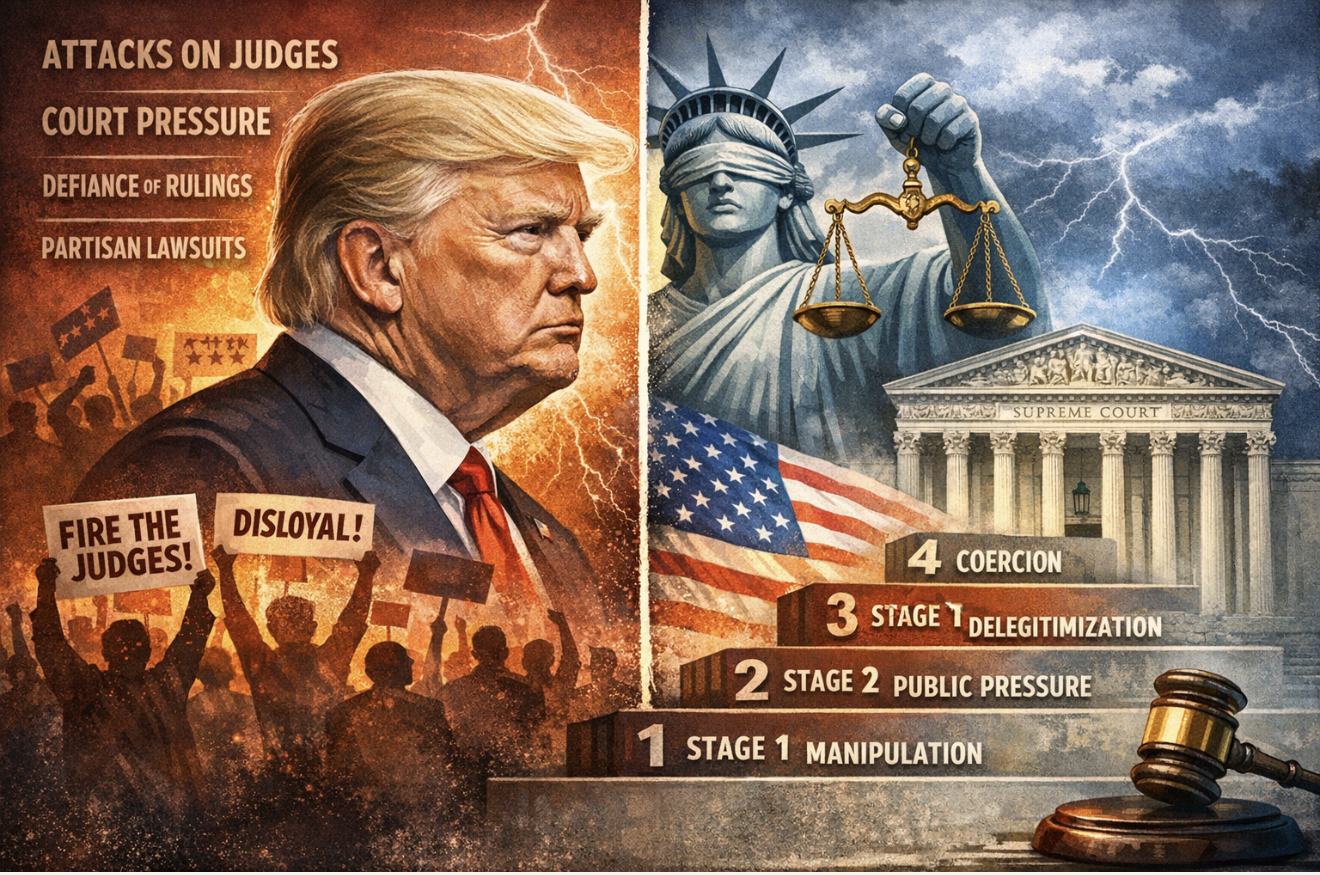
Intimidating The Judiciary: Trump and A Global History of Executive Pressure on Supreme Courts- From Washington to Berlin to Budapest, and the warning...




Social & Political Issues / Sep 19, 2026
A Death, and a Remembrance of a Time PastSocial & Political Issues / Oct 18, 2003
Abuja As A Hi-Tech Hub For Innovation, Entrepreneurship, And Knowledge ExchangeSocial & Political Issues / Jun 02, 2004
About "Security Breach" and "Coup Scare"Social & Political Issues / Oct 05, 2002
ABOUT THE NORTHERN AGENDA : "General said, Chief said, Alhaji said"Social & Political Issues / Feb 09, 2006
Abduction of Oil Workers: Matters Arising© 2026 Segun Toyin Dawodu | All rights reserved